
The death of Alex Pretti in Minneapolis should rightly concern everyone and invite transparent investigation.
Early this week the truth appeared to be coming out, as one would hope, and so far it has certainly not been on the side of the 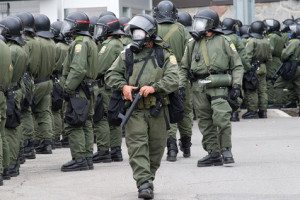 Ice Agents or the early explanations by Federal authorities, who should know better than to reach conclusions without any actual evidence. See this detailed WSJ piece online.
From watching the video and the early analysis, it appears to be either a terrible accident or an intentional but unnecessary killing. But I appreciate that there is still more investigative work required to reach a meaningful decision on whether to prosecute, and we should let the authorities, including local law enforcement, do their work.
Beyond the important to-be-established details of this incident, we must recognize that there are rogue/imperfect actors on both sides of any law enforcement badge. Wrong behavior must be prosecuted, no matter the narrative anyone—in the government or in the streets—wishes could be justified with a lie. Certainly not always (see below), but generally, that’s what happens in our country—see the investigations of the murders of George Floyd, Charlie Kirk, etc.
I want to add a “senior” perspective. This is not the first time in just my own lifetime that a similar large national issue has provided the setting and the fuel for a terrible local tragedy.
You’ve heard or read my thoughts on 1968, one of the worst years ever. If you can find time to read just the Introduction and first few pages of We Asked Why Not?, you’ll understand my despair at the time, and the similarities with today.
Back then, like now, a small segment of our society was being singled out for unequal, life-changing, and potentially deadly treatment, while no one seemed to care. At that time, the targeted group was young men, being conscripted to fight, and potentially die, in the hellhole of the Vietnam jungle.
I have always supported national service and have nothing but the greatest admiration for my peers who served in the Army at that time, and particularly for those who spent time in Viet Nam. I eventually served for three years as the Communications Officer on a guided missile frigate (1971-1974). But in 1968 I did not want to die, like a friend had, for the colonial regime in South Vietnam. It made no sense to me or to most in the young men I knew who, like me, were targeted by our government.
You want to talk about “fascism”? In order to leave the country to go anywhere, any young male had to have a special form from his Draft Board permitting him to do so. They were not easy to get. I was very lucky to obtain one in August, 1968, to begin graduate study abroad. I had a two-year Marshall Scholarship and a one-year permission to travel–not a good recipe for the future, but it was the best there was at the time.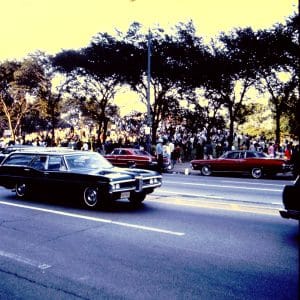
And that month in Chicago at the Democratic National Convention over 500 protestors were injured, some severely, when, according to the official Walker Report, there was a “police riot” outside the Conrad Hilton Hotel. But, even though the police threw protestors through plateglass windows, they never fired into the crowd, and, miraculously, no one was killed.
That was 1968. What about 1970? In the intervening two years we’d changed presidents, but the Vietnam War continued almost unchanged, and in April we expanded into Cambodia. Deaths mounted on both sides. Like today with law-abiding immigrants who have been mistreated, everyone knew someone in 1970 who had been killed or severely wounded by the war–a connection far stronger than the statistics in the newspaper or the claims of a politician. It became personal, just like now. Whatever we’d experienced in May, 1968 was only intensified in May, 1970, when student War Protestors (just like me) gathered on the green at Kent State.
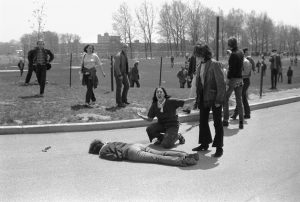
Teenager Mary Ann Vecchio screams as she kneels over the body of Kent State University student Jeffrey Miller (1950 – 1970) who had been shot during an anti-war demonstration on the university campus, Kent, Ohio, May 4, 1970. A cropped version of this image won the Pulitzer Prize. (Photo by John Filo/Getty Images)
As recounted in this excellent Wikipedia piece, Kent State shootings – Wikipedia, “twenty-eight National Guard soldiers fired about 67 rounds over 13 seconds, killing four students and wounding nine others.” No Guardsman, or anyone else, was ever prosecuted for firing live rounds into a group of unarmed students.
So, tragically, we’ve experienced before what can happen when an amped-up local flash point, fueled by inept or absent leadership on all sides, becomes the fault line for a deeply felt national issue, the earth tears, and people die.
In May of 1970 I read about the Kent State massacre almost every day while finishing up my studies at LSE. And I had been ordered to join the Army as soon as I was home. I almost did not return to the U.S. that summer. In the hyped-up news accounts, it sounded like every young male, easily identifiable by our physical characteristics, like everyone who looks “different” today, was a potential target to be stopped and even arrested if he did not have the proper papers from his Draft Board. Sound familiar? Had I not miraculously also been accepted into Naval OCS at almost the same time, I may have tried for asylum in the UK or elsewhere. Not sure what I would have done—but I thought about it every day, as I’m sure immigrants and DACA children do today. It was the dilemma we all had to deal with then, just like immigrants today have to try to navigate the ICE system of random stops and inquiries, with even less process than we would have received.
My personal takeaways from these two terrible, life-ending events, separated by 56 years:
- There are always evil/inexperienced/poorly trained individuals who will act badly when placed in positions of power over others. Someone fired the first shot in Minneapolis and at Kent State. Those actions should be investigated thoroughly, and if the actual facts warrant, the shooters, in or out of uniform, should be prosecuted.
- It is incumbent on everyone in a position of power, from the President to a governor, mayor and police chief, to lower the tension as much as possible in these kinds of situations, removing the fuel that can be easily ignited, while still performing their lawful responsibilities.
- ICE should stick to detaining and/or deporting only those who have clearly violated a serious law, either here or in their home country. That was how their work was first portrayed; it should be only that. Mass roundups and random stops based on physical appearance should end immediately.
- Local officials have a reciprocal and equal responsibility to assist ICE by turning over indicted or convicted offenders when they are in custody, rather than forcing ICE into the neighborhoods. Sanctuary states and cities create an environment which invites bad acting. Somehow the correct and lawful process works in some states. It should work in all states.
- The next statement is not meant to be simplistic or pollyannish—just the truth: We’ve been here before, and we made it through. If we transparently pursue the true facts as outlined above, and take steps to reduce the temperature, the fire should go out, and we can then move forward with reasonable, common-sense policies and procedures. We survived the Kent State tragedy (and others), and we will do so again in Minneapolis. But we have to make those lost lives matter, and learn from the experience.
- The solution which will finally remove this difficult issue is true Immigration Reform, from top to bottom. We’ve made the conditions for doing so more possible by finally closing the border over the past year. With that done—always a conservative pre-condition—let’s now write the laws which will provide for legal immigration based on one’s skills, various types of Temporary Work Permits in different industries, and paths to citizenship for DACA children and others who have been here for more than, say, three years and just want to work hard and get on with their lives.
It’s terrible that we’ve seen this before. But our faith teaches us that terrible suffering can be redemptive, if we let it. We simply must, for the sake of our nation and our children’s children.
As always, we need enlightened and common-sense leadership on both sides of the political aisle, not afraid to take criticism for doing the right thing–leaders who approach serious issues with a trace of humility.
Who are they, and where are they?
__________________________________________
Please write a Comment below. And, finally, to see many personal photos from our 1968 experience at the Democratic National Convention as the Georgia Challenge Delegation, go to www.parkerhudson.com/1968gallery. And you can hear an interview about the events all that summer at the Georgia Politics Podcast.


Comments